
PROJECTS
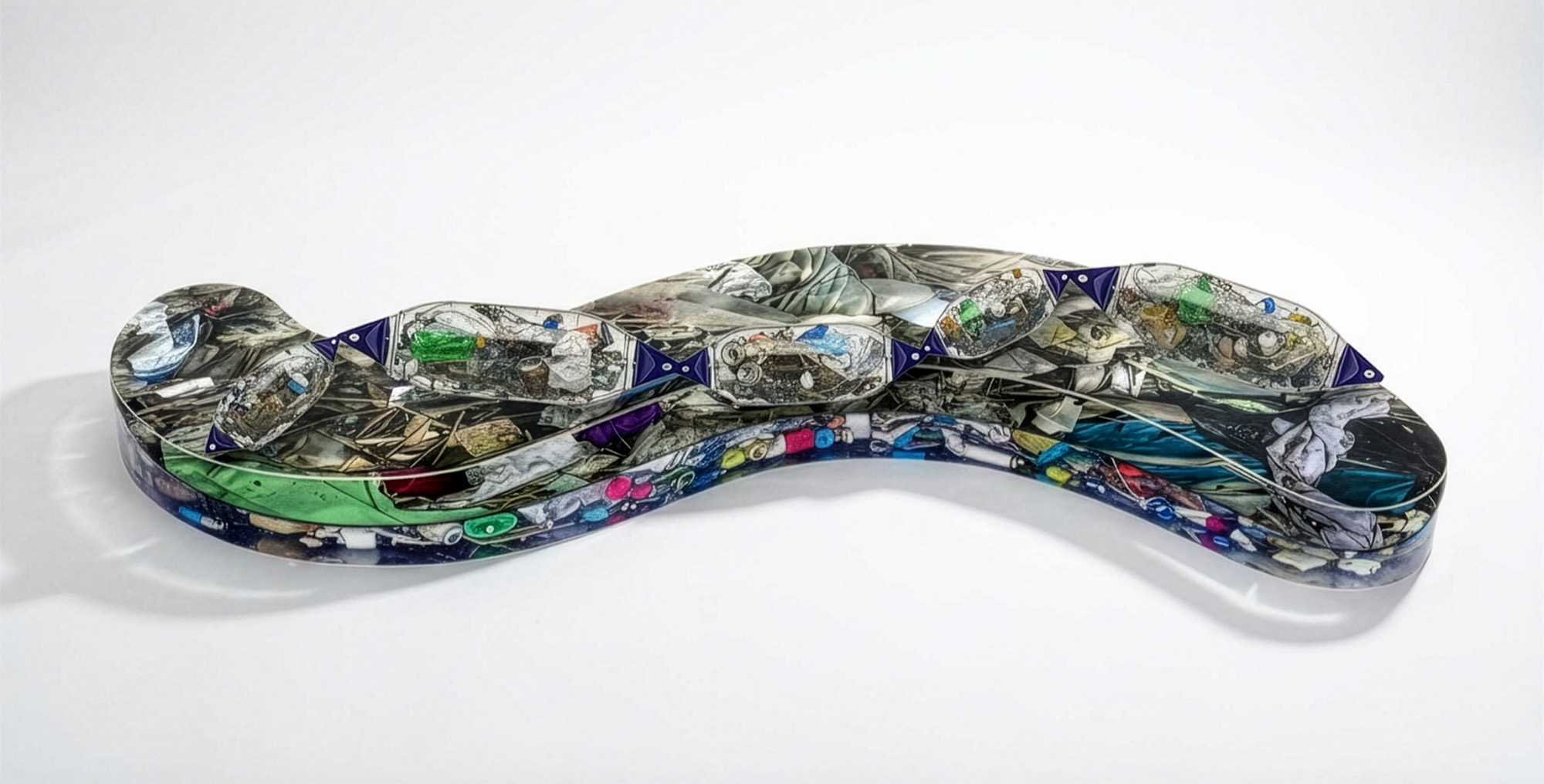
Sea Trash Sofa
Dimensions Variable
Custom printed fabric over foam, sea-trash cast in resin, buoys filled with sea-trash
Rendering for PortMiami Terminal G, Royal Caribbean cruise-line installation and sculptural seating proposal. | This undulating fender-style sofa is upholstered in fabric printed with photographic imagery of the massive accumulations of trash found along the coasts of Panama. The seating rests on a plinth constructed from actual sea debris collected in South Florida, suspended in clear resin. Seating zones are further defined by transparent buoys, also filled with refuse gathered from local coastlines. Together, these elements create a contemplative space for tourists and port staff, inviting quiet reflection on consumption, responsibility, and the waste we can prevent from polluting and destroying our beaches and oceans. | Click here for more information about this project and Miami Dade County’s Art in Public Places initiative.
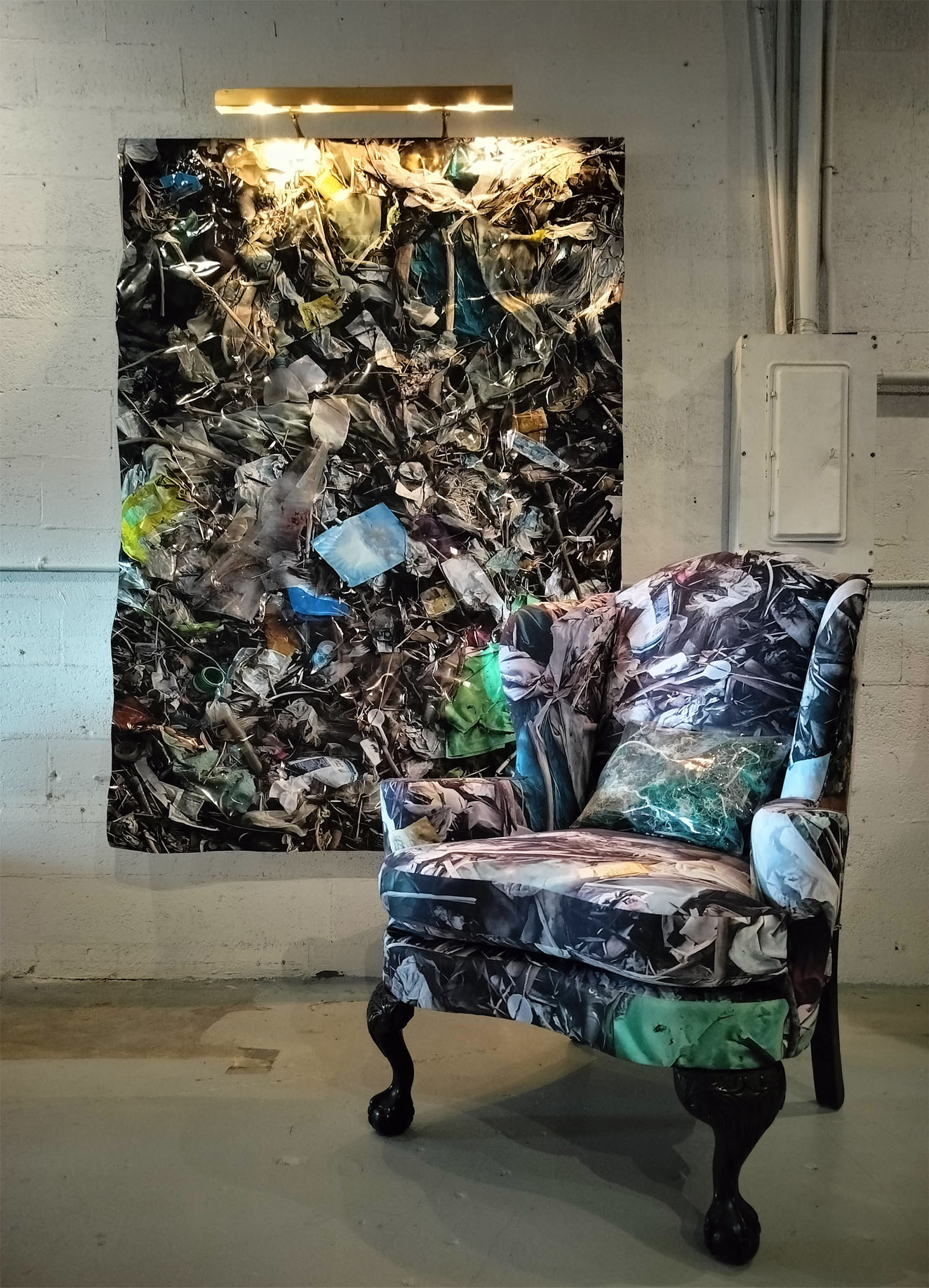
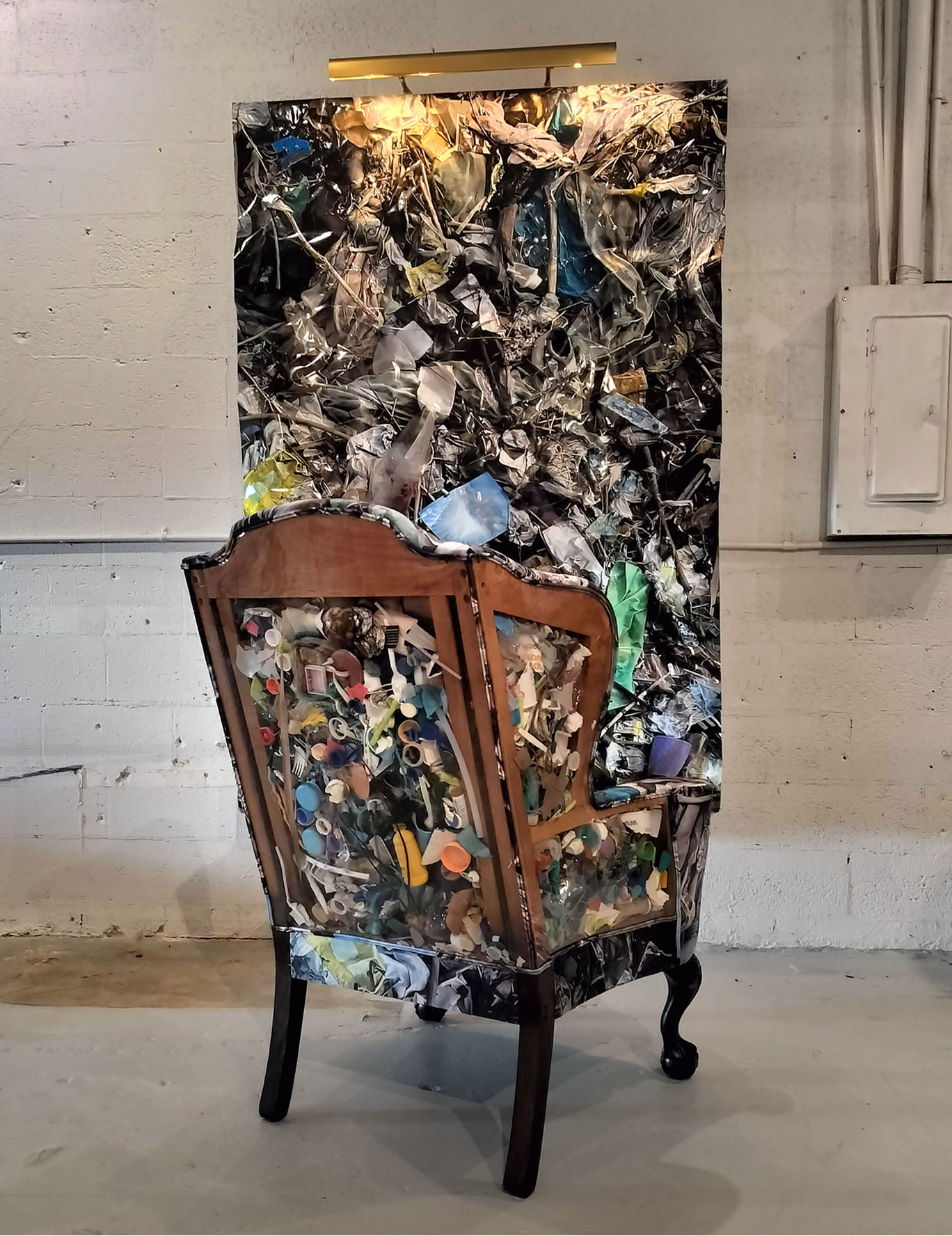
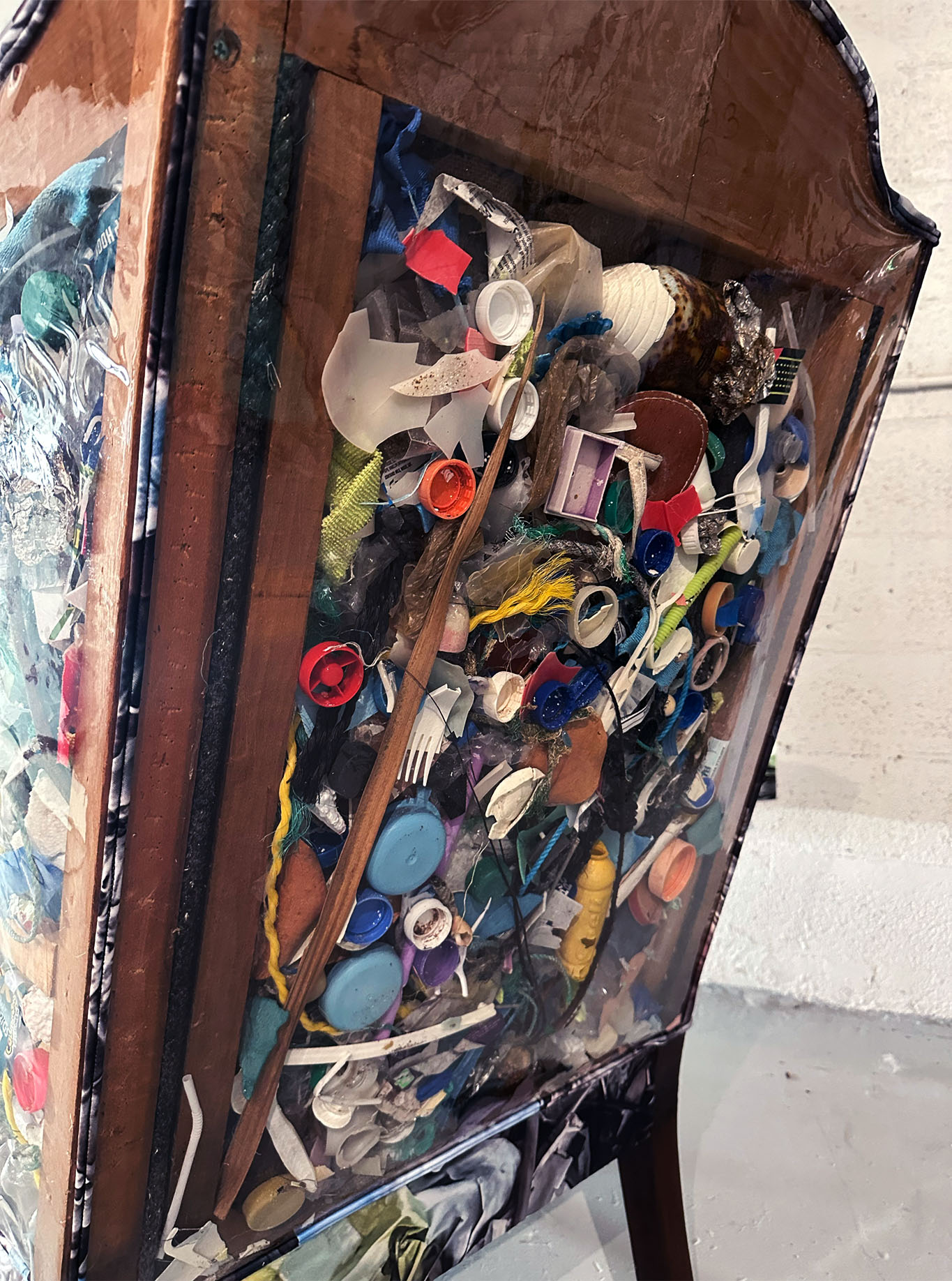
Sea Trash Chair & Print
2026 | Dimensions Variable
Deconstructed and reupholstered arm chair, custom printed fabric, sea trash, archival print, museum light, wood
This armchair has been deconstructed and reupholstered in fabric printed with photographic images of the vast accumulations of waste found along the coasts of Panama. The rear panels are reupholstered in clear vinyl, revealing that the original filling has been replaced with actual trash collected from beaches throughout the Florida Keys, materially linking South Florida and Latin America, two regions in which the artist is deeply rooted and actively engaged both philanthropically and artistically. The chair is accented with a pillow constructed from the same printed fabric and clear vinyl, stuffed with frayed rope sourced from coastal debris. Positioned behind the chair is an archival photographic print depicting coastal waste from Panama, intentionally crumpled to echo the material disorder within the image itself. Illuminated by a museum-style light fixture, the print elevates the discarded subject matter while casting ocean-like highlights across its folds and surfaces.
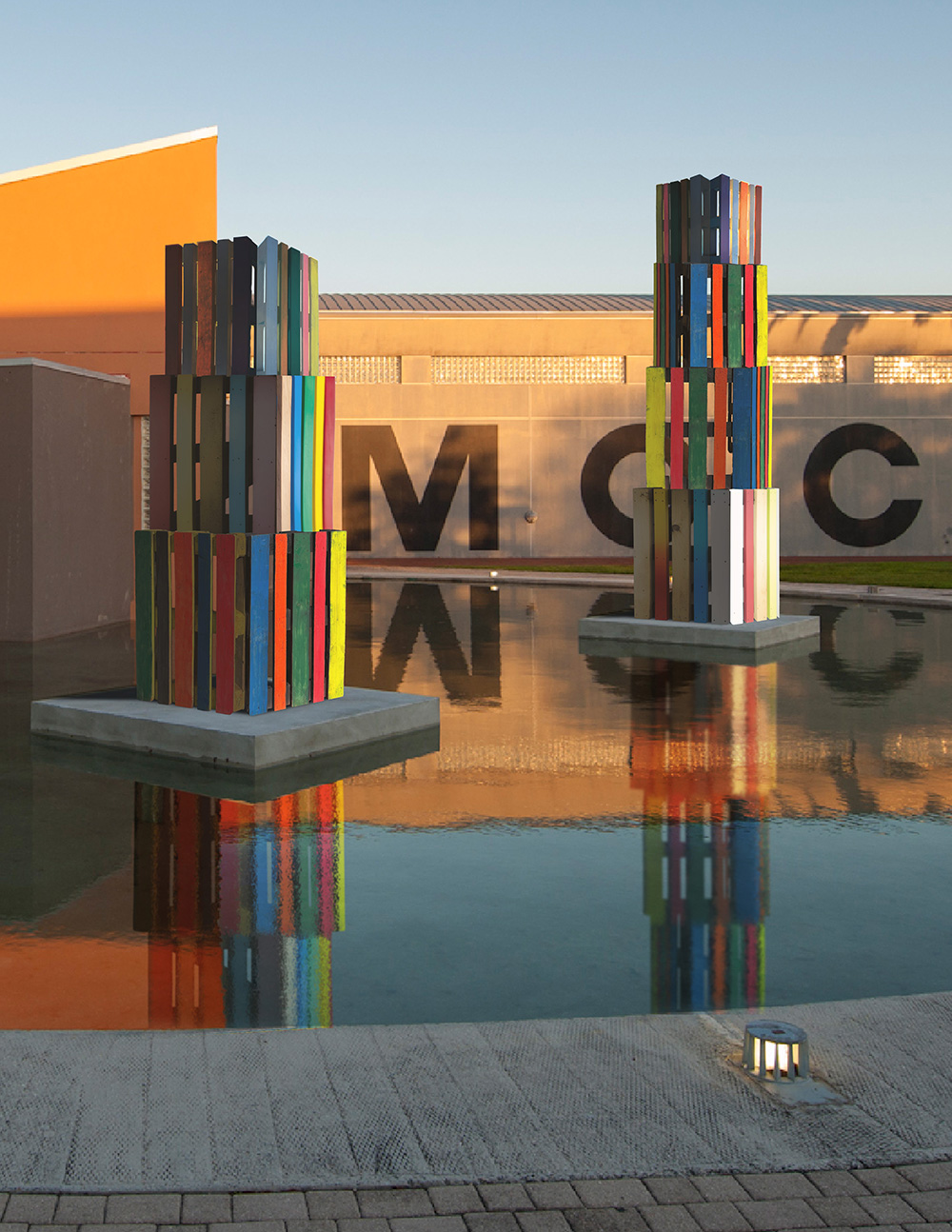
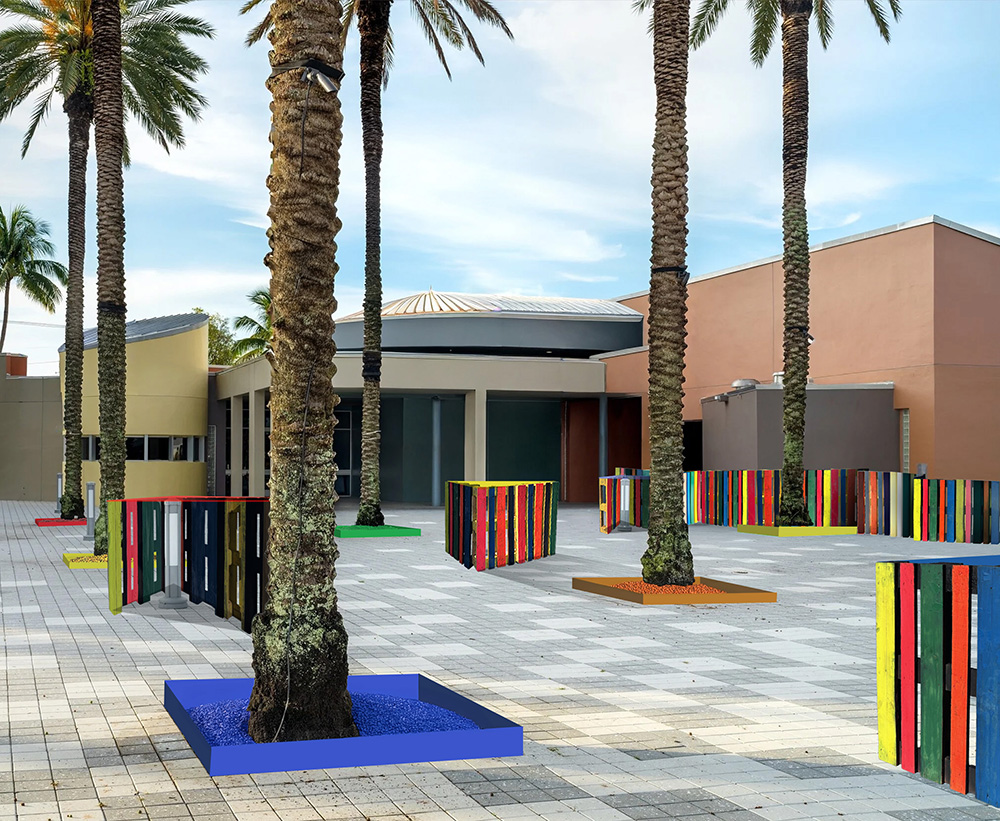
Trasformations 2.0
2025 – 2026
Dimensions Variable
Painted packing pallets acrylic, plastic, fasteners, LEDs, colored gravel, rubber
Over the years I have made it part of my artistic practice to collect trash and discarded objects of all kinds, sizes, and levels of disintegration. Whenever I leave my current studio, located in an industrial neighborhood in Oakland Park, and I see trash in the grass,on the streets or alleys, and in the dumpsters, in it the same thing: possibility. It is the possibility that a long line of artists (Nevelson, Rauschenberg, Smith (David), among many others) also saw before me, looking at something and ‘seeing’ something completely new, different and unexpected. This is the same spirit that has inspired the multi-part, sculptural installation, TrashFormations 2.0, which I am proposing for the museum’s plaza.
The impetus for this installation came while exploring the possibilities of discarded wooden palettes, commonly found throughout my neighborhood and in areas of North Miami. By applying vivid paint colors and various materials like colored acrylic, hinges and light to the pallets I am readjusting the function of these objects while composing them into new formal geometric shapes and orientations that both challenge and honor the museum’s architecture. I aim to reference details of the Gwathmey Siegel designed structure while also paying homage to many striking buildings, houses, barns and sheds I have found while living and traveling in rural Latin America.
Through the process of inviting the community to move throughout this installation I also aim for the public to find renewed value and meaning for that which is easily thrown away and undervalued in our society today. I also see in this work an opportunity to activate various grass roots projects that could motivate local creatives to find their own voice while re-imagining the neglected, discarded pallets and objects they find in their local neighborhoods to create their own ‘pop up’ installations as part of the museum’s programing in tandem with this installation.


 Adam von Dolle