
The Origin of portrt
portrt was conceived just after Frankie Ray was born.
At the time I was working as an interior designer. Frankie Ray’s mother is the daughter of a longtime client of mine, though by then the relationship had long since moved past being about business. This sometimes happens over enough years and shared projects. People gradually move from clients to something closer to extended family, their lives becoming familiar to you through dinners, conversations, holidays, celebrations, losses. The ordinary accumulation of time spent around one another. Their joys begin to feel strangely personal. Their milestones become events you carry alongside your own.
At the time I was working as an interior designer. Frankie Ray’s mother is the daughter of a longtime client of mine, though by then the relationship had long since moved past being about business. This sometimes happens over enough years and shared projects. People gradually move from clients to something closer to extended family, their lives becoming familiar to you through dinners, conversations, holidays, celebrations, losses. The ordinary accumulation of time spent around one another. Their joys begin to feel strangely personal. Their milestones become events you carry alongside your own.
When Frankie Ray’s parents purchased their first home, it felt natural that I became part of the renovation team. In a race towards completion before their daughter’s birth, the work moved forward where every decision was animated by anticipation. Empty rooms somehow already inhabited by memories. The whole house felt as though it were preparing itself to receive someone unknown but already loved.
As the renovation neared completion, I offered to create a piece of art for above the living room fireplace. I remember saying it almost casually, although even then I felt the weight of the offer.
The problem, of course, was that I had absolutely no idea what I was going to make. I am not a painter although a painting would have been the obvious choice. Around that same period, I had been working on a conceptual art piece involving QR codes embedded within physical artwork, not simply as a functional device but as a doorway into another layer of experience, to something hidden behind the visible object itself. The use of QR technology in art was rare but not a revolutionary idea then.
For a few days I carried the problem around unresolved. When I thought about it, nothing felt right. Every idea seemed either decorative, formulaic or incomplete in some way I could not entirely articulate. Then one night at 2:49 in the morning—I remember checking the clock because it was still dark out and I was interested to know if I should be getting up—it came to me.
Lying there awake in the stillness of the night, an idea began to unfold. First the image of Frankie Ray herself—a smiling baby face, then gradually the image became crowded by others. Names. Relatives. Ancestors—most of whom were unknown to me—surfacing one after another across her face until the portrait no longer appeared to depict a single individual only but rather the countless lives reflected in hers: the layering of a baby’s portrait and her ancestry as the metaphysical idea of Identity.
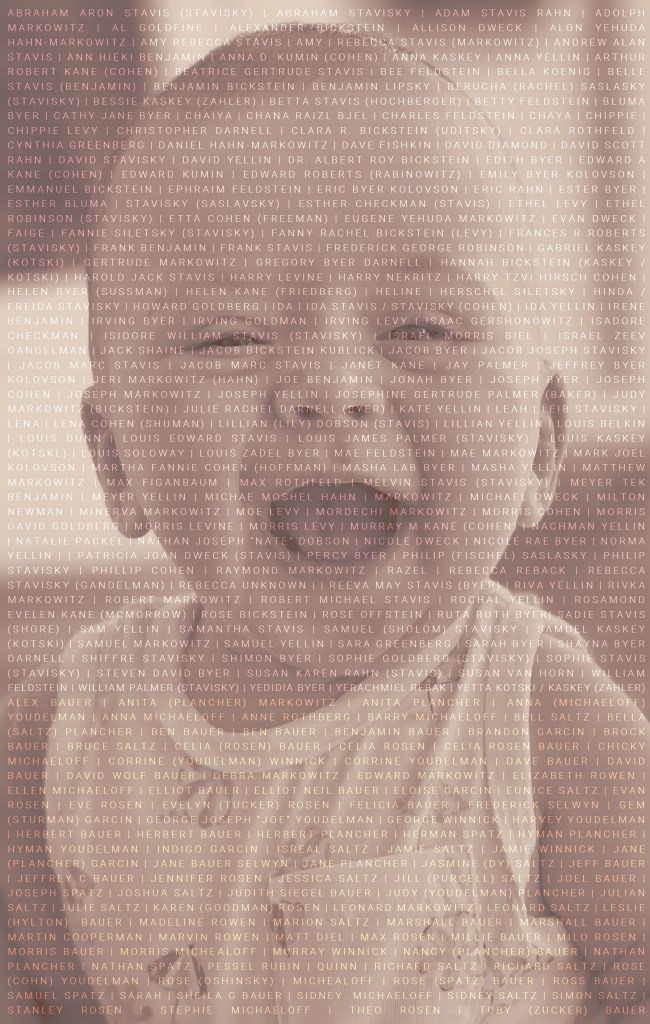
Frankie Ray’s original portrait was a simple concept. Her face layered with the names of her relatives. And I imagined the portrait changing over time. Each year a new photo. The infant eventually replaced by the toddler learning to walk, then by the child growing to discover language and humor.
Year after year friendship, curiosity, affection as well as all the small ordinary experiences by which an individual life gradually becomes recognizable would be recorded on the portrait. The family names that initially surrounded her would not disappear entirely but begin to recede. Gradually the balance would shift. And over time her own memories would begin accumulating. Her own relationships. Her own stories. Her own Identity.
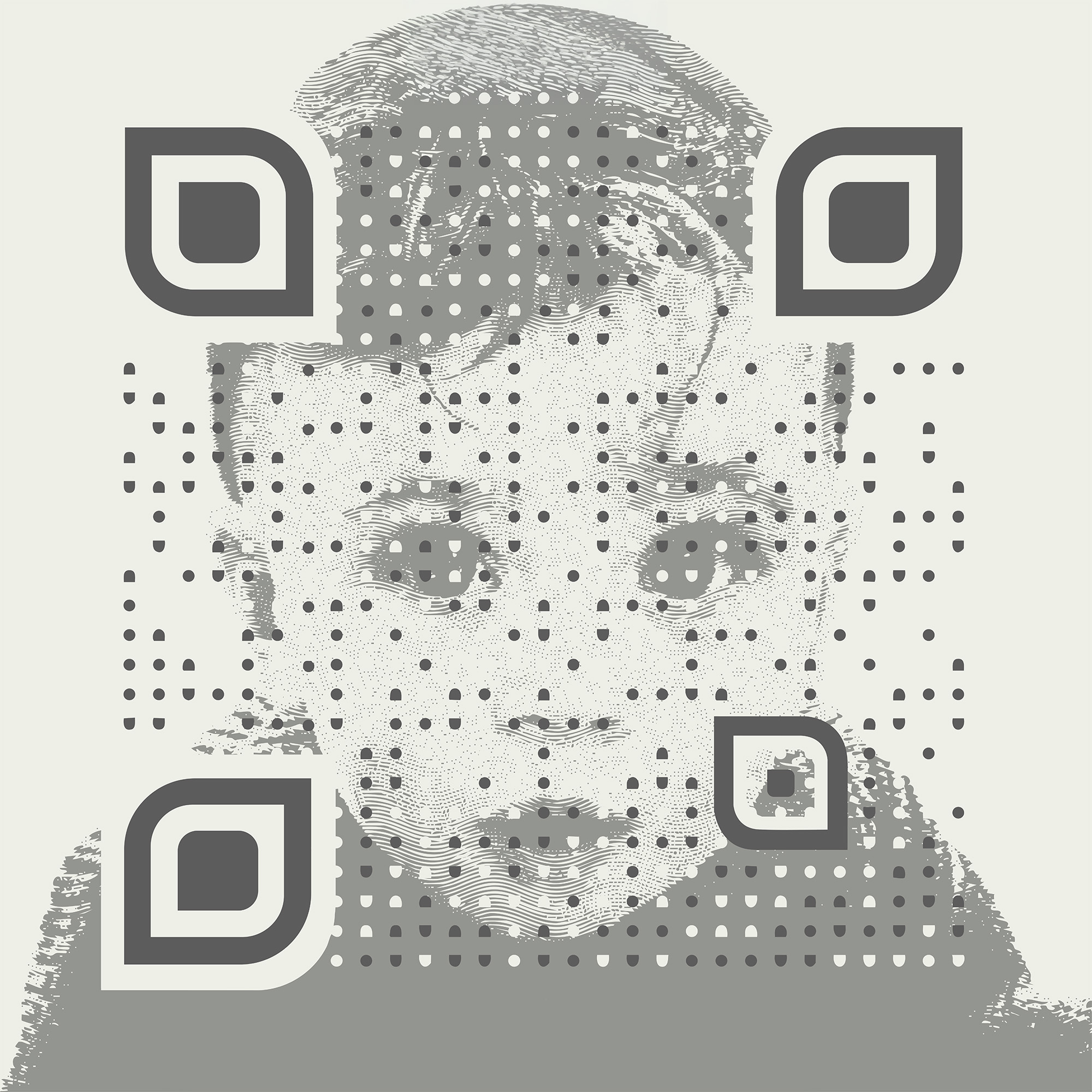
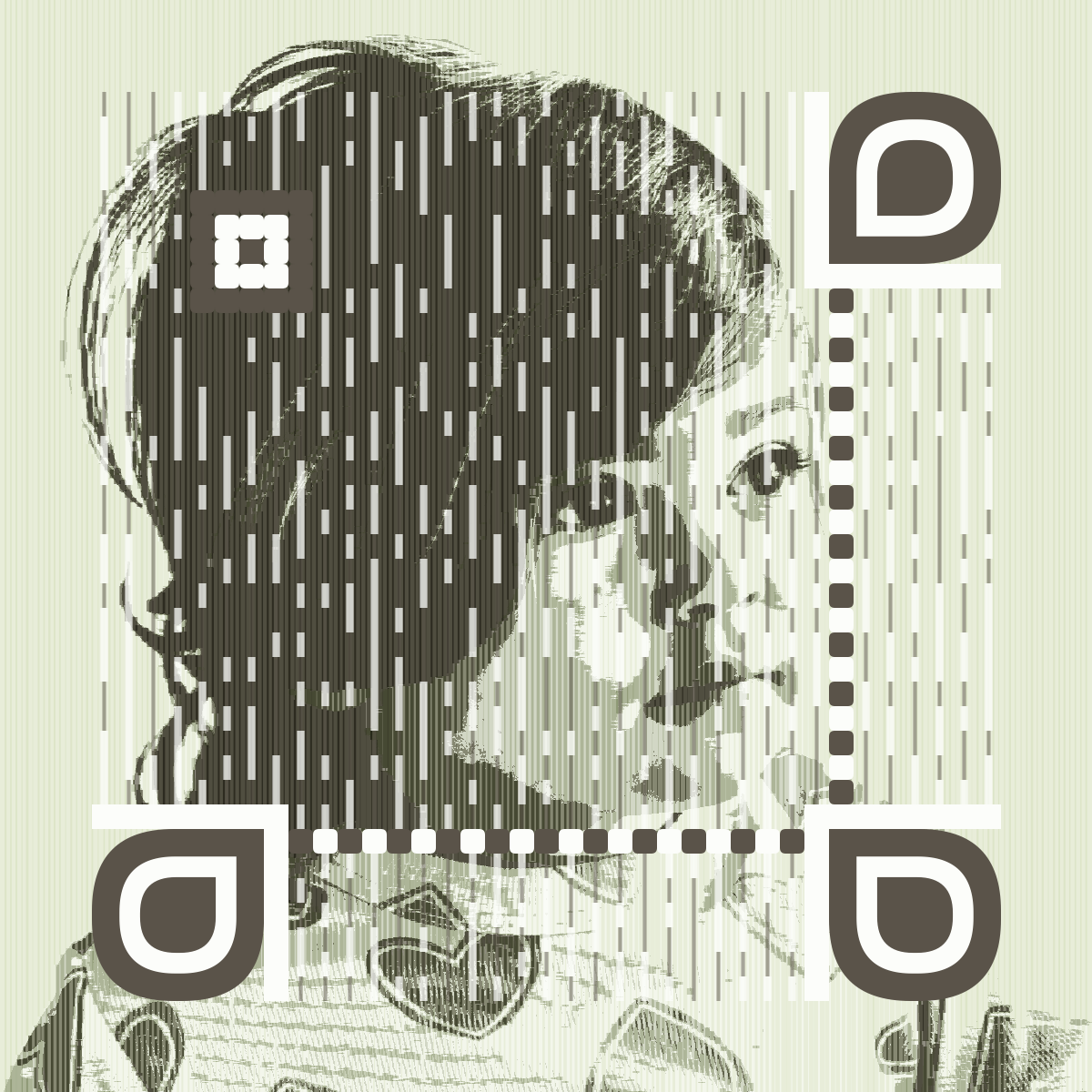
Shortly after coming to these conclusions and producing the first QR accessed portrait, I began to sense that the desire to collect and record her identity was not something that could apply only to Frankie Ray’s family, but clearly to others like them, people wanting the ability to curate their own personal stories and as well as for those loved ones around them.
Around this time by chance I met my business partners, Ben and Ryan. Ben Morey, who is an artist, an accomplished graphic designer and marketing director, had been working in my studio for a few months, supporting my art work with a knowledge of the digital world I don’t possess but which had become critical for an art practice today. He became my collaborator on Frankie Ray’s portrait. Without his patient input into the portrait, these first steps in envisioning what would become portrt would have been lost, no more than sketches like so many other unrealized art projects of mine.
A couple of months after Frankie Ray’s portrait had been installed, I started to talk with Ryan Pinagel about this new idea about identity, ancestry and memory based on a piece of art I had just installed. I didn’t know Ryan especially well since we had only spent time in the boxing room at the local gym together. Soon I found out he had a management consulting company and had shepherd a number of companies in their development and growth. A remarkable convergence of talent and vision began taking shape to allow portrt to coalesce.
In this same period another realization began to occur to us. Most modern social platforms preserve fragmented thoughts and experiences remarkably well. Images. Videos. Messages. Isolated moments detached from one another. Stories separated from chronology. Memories separated from relationships. Lives gradually fragmented into disconnected thoughts.
The more we considered it, the more the portrait ceased feeling like an artwork and began feeling like the beginning of a much larger question. What would it mean to create a space capable of holding Identity itself? Not merely media, documentation or nostalgia, but the evolving shape of a life unfolding over time alongside other lives. A place where memory remained connected to context. Where stories could accumulate collaboratively. Where Identity could be understood not as something fixed and isolated, but as something formed continuously across generations.
That question eventually became portrt. Two years later, the idea has continued growing beyond anything I could have understood, lying awake in that dark room in the middle of the night, thinking about a child not yet born and a home quietly waiting for her arrival.


 Adam von Dolle